A Mitsubishi HVAC Maintenance Calendar for Pomona
Last updated: 2026-06-13. A practical schedule for Pomona's Climate Zone 9 summers.
Real-talk answer: Pomona Mitsubishi HVAC keeps Mitsubishi systems alive through Pomona's brutal summers (91766, 91767, 91768) with a simple rhythm: clean filters every few weeks, a spring professional service before the heat, and a fall check after it. In Climate Zone 9, with 60-80 days over 90 F, that schedule prevents most no-cool calls. Call (213) 799-8423 or book online for a tune-up.
The basics
- Maintenance plan for Mitsubishi and central systems across Pomona 91766, 91767, 91768
- Filters: rinse every 2-4 weeks in summer, monthly otherwise
- Spring (Mar-Apr): full pro service before the first heat wave
- Fall: post-summer check and condensate flush
- Annual pro service: coil and blower cleaning, charge, capacitor, drain
- Prevents most P6 freeze, P4/P5 drain, and capacitor failures
- Independent, all-brands shop
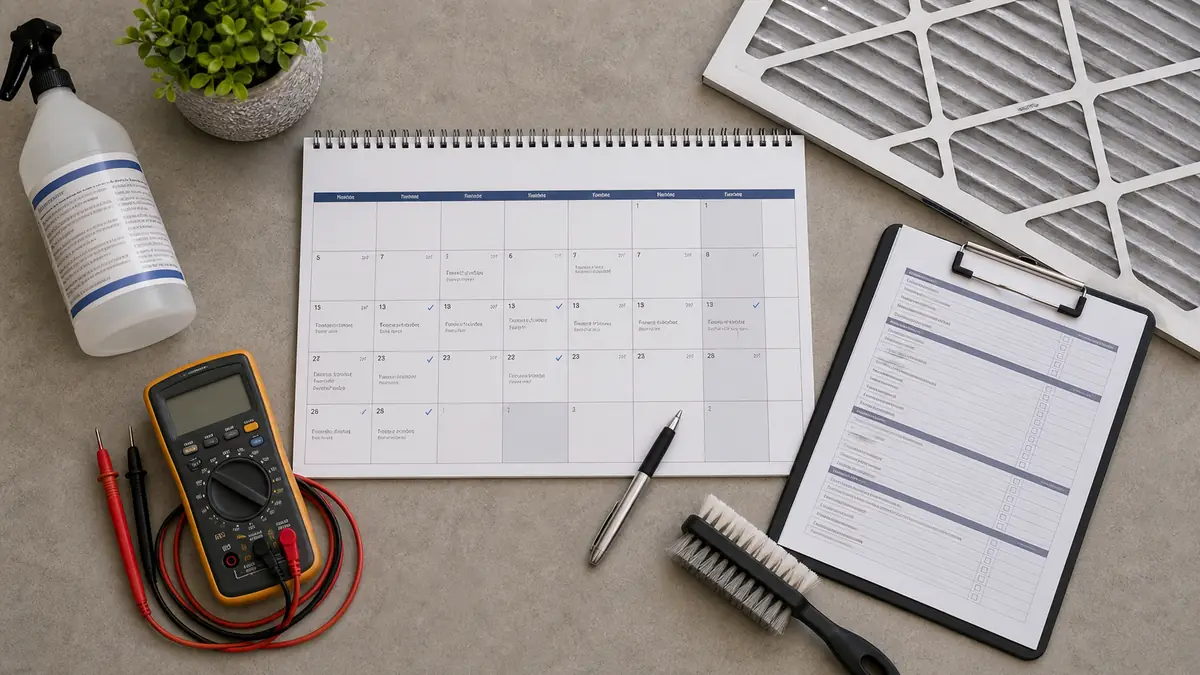
Why does maintenance matter more in Pomona?
Pomona is one of the hottest cities in the San Gabriel Valley, deep enough east to catch Inland Empire heat. With 60 to 80 days a year over 90 F and routine 100 F-plus Santa Ana stretches, a Mitsubishi system here logs far more runtime than the same unit on the coast. More runtime means faster filter loading, more dust on the condenser coil, more condensate through the drain, and more thermal cycling on the capacitor and inverter. Maintenance is not optional polish here; it is what keeps a hard-working system from failing on the hottest afternoon of the year, exactly when service slots are scarce.
What should I do month to month?
The homeowner side is mostly filters and a clear outdoor unit. The professional side bookends the cooling season. Here is the rhythm we recommend for a Pomona home.
| When | Task | Who |
|---|---|---|
| Year-round, every 2-4 weeks (summer) | Rinse and dry indoor head filters | Homeowner |
| Monthly | Check outdoor unit is clear of leaves, dust, debris | Homeowner |
| March-April | Pro service: coil clean, charge check, capacitor test, drain flush | Pro |
| June-September | Watch for P-codes, weak airflow, or rising bills; call early | Both |
| October-November | Post-summer check, condensate flush, heat-mode test | Pro |
| Anytime | If a head leaks or throws a U-code, stop and call | Homeowner |
Month-by-month: what to do and when in Pomona
Pomona's cooling season is long and front-loaded with dust, so the calendar is not evenly spread. Here is the year broken down the way a hard-working Zone 9 Mitsubishi system actually needs it, with the homeowner tasks and the two professional bookends called out.
| Month | Task | Why it matters here |
|---|---|---|
| January | Test heat mode on an H2i head; clear leaves from the outdoor coil | The few cold mornings reveal a weak heat-side EEV or defrost issue before nothing else is wrong |
| February | Rinse filters; check the kumo cloud app or controller for stored codes | Catches a slow P1/P2 thermistor drift before the cooling season loads the system |
| March | Book the spring pro service; clear winter debris from around the condenser | Slots are open now and gone by July; this is the single most important date on the calendar |
| April | Pro service completed: coil clean, charge and superheat check, capacitor test, drain flush | Beats the first 95 F stretch, which in Pomona can arrive in April |
| May | Rinse filters; confirm condensate drains freely to a clean termination | Pre-loads the drain before heavy condensate season so P4/P5 trips do not start |
| June | Filters every 2-4 weeks; keep 18+ inches clear around the outdoor unit | Fairplex-area dust and the start of 90 F-plus days load filters and coils fast |
| July | Filters every 2 weeks; watch for icing, weak airflow, or any P/U code; call early | Peak load and peak failure month; a small fault now strands you in 100 F heat |
| August | Filters every 2 weeks; rinse the outdoor coil face with a gentle hose | Santa Ana dust caked on the condenser raises head pressure and energy use |
| September | Keep filters fresh; note any rising bills versus July | A late-season efficiency drop often means a dirty coil or a slow charge loss |
| October | Book the fall check; flush the condensate drain | Closes out the cooling season and resets the drain before winter standby |
| November | Fall pro check: heat-mode test, drain flush, electrical recheck | Confirms the H2i side works before you need it and catches summer wear |
| December | Rinse filters; visually check line-set insulation for sun damage | Pomona UV degrades line-set wrap, which costs efficiency and invites condensation |
How do I clean a Mitsubishi mini-split filter the right way?
The single highest-value homeowner task is also the easiest, and most people do it wrong by skipping the dry step. Lift the front panel of the MSZ head until it clicks, slide out the two mesh pre-filters, and gently lift away any optional deodorizing or electrostatic filter behind them. Rinse the mesh under lukewarm water from the back side to push dust out the way it came in, never with hot water or a stiff brush that frays the mesh. Let them dry completely in the shade; reinstalling a damp filter feeds the biofilm that grows on the blower wheel and throws that musty smell. In a heavy Pomona summer this is a two-week rhythm, not a once-a-season chore, and it heads off more P6 freeze trips than any other thing you can do. While the panel is open, glance at the indoor coil fins; if they look gray and packed rather than bright aluminum, that is a sign the deeper professional coil cleaning is overdue.
What does a professional tune-up actually include?
A real service is more than a glance. On a Mitsubishi system we clean the indoor blower wheel and coil where biofilm builds, clear and flush the condensate drain and test the pump and float (the P4/P5 prevention), wash the outdoor condenser coil so it sheds heat properly, verify refrigerant charge and superheat, and test the run capacitor and electrical connections before they fail in the heat. On a ducted system we also check static pressure and filter sizing. Each of these heads off a specific summer breakdown, which is why a spring visit costs far less than the July emergency it prevents.
Which problems does maintenance prevent?
Most of the common ones. A clean filter and coil prevent the airflow restriction behind P6 freeze trips and a frosted evaporator. A flushed drain and a tested pump prevent the P4/P5 water leaks that stain plaster walls in older Lincoln Park homes. A verified charge catches a slow flare-joint leak (U7/P8) before it starves cooling and overheats the compressor. A tested capacitor catches the single most common Pomona summer failure before it strands you. What maintenance cannot promise is to stop a random inverter board failure, those happen, but it removes the slow-decline causes that make up the bulk of our calls.
How do I take care of the outdoor condenser in Pomona heat?
The MUZ or MXZ outdoor unit does the heavy lifting in Zone 9, and it lives in the worst of the dust and sun. Keep at least 18 inches of clearance on all sides and two to three feet above it so it can reject heat; a unit boxed in by an oleander hedge or a recycling bin runs hotter, pushes head pressure up, and shortens compressor life. A few times each summer, with the disconnect off, rinse the coil face gently from outside in with a regular hose to wash off Fairplex-season dust and cottonwood fluff, never a pressure washer, which bends the soft aluminum fins flat and chokes airflow. Watch where the condensate from any nearby head terminates so it does not pool against a foundation or a historic Lincoln Park porch pier. If the fan grille hums or the unit vibrates harder than it used to, note it for the next service rather than ignoring it; a failing DC fan motor (code U8) caught early is a far cheaper visit than a heat-soaked compressor that quit because the fan stopped moving air.
What does skipping maintenance actually cost?
The bill for neglect is not abstract; it shows up as specific Pomona repair calls. A filter left dirty through July restricts airflow until the coil frosts and the head throws P6, then drips and stains a plaster ceiling, turning a free rinse into a service call plus drywall touch-up. A condensate drain never flushed clogs, the float opens or the pump fails, and you get P4/P5 and water on the floor of a 1920s bungalow. A coil left caked drives head pressure and energy use up all season, then cooks the run capacitor, the most common Pomona summer failure at $150 to $450, often on the hottest day when slots are full. Worst case, a slow flare-joint leak ignored long enough starves the compressor and overheats it, and an inverter compressor is a $1,200 to $3,500 replacement. Every one of those is cheaper to prevent at a spring tune-up than to fix mid-heat-wave, which is the entire argument for the calendar above.
How long should a well-maintained system last?
A Mitsubishi inverter system that gets clean filters and an annual service can run reliably for well past a decade, even on Pomona's heavy duty cycle, before efficiency and parts availability push toward replacement. A neglected one in the same heat can lose its capacitor in five years and its compressor not long after. The math is simple: a few filter rinses and one tune-up a year protect a system worth thousands. When yours does reach end of life, our SEER2 and rebate guide covers the replacement decision.
Common questions
How often should I clean my mini-split filters in Pomona?
Every 2 to 4 weeks during heavy summer use, and at least monthly the rest of the year. Pomona's Fairplex-area dust and long Climate Zone 9 cooling season clog filters fast, and a clogged filter is the root cause behind many P6 freeze trips and P4/P5 drain overflows. Rinse, dry, and reinstall; it is the single highest-value thing you can do.
When is the best time to service my system before summer?
Spring, ideally March or April, before the first 95 F stretch. That is when we check refrigerant charge, clean the condenser coil, flush the condensate drain, and test the capacitor, so the system is ready when you actually need it. Waiting until July means competing for a slot during peak no-cool season.
Do ductless mini-splits need professional maintenance, or just filter cleaning?
Both. You handle the filters; we handle a deeper service once a year, blower-wheel and coil cleaning, drain pan and pump check, charge verification, and an electrical inspection of the capacitor and connections. Indoor coils and blower wheels grow biofilm that a filter rinse cannot reach.
Can maintenance really prevent the expensive repairs?
It prevents many of them. A cleaned coil and a verified charge stop the slow-decline failures that cook capacitors and stress the inverter compressor in Zone 9 heat. It will not stop every random board failure, but it heads off the dirty-coil, clogged-drain, and low-charge problems that make up most summer calls.
Related: Water-leak prevention · High energy bills · Fault codes · When to replace