Mitsubishi Mini-Split Leaking Water in Pomona, CA
Real-talk answer: Pomona Mitsubishi HVAC fixes leaking Mitsubishi mini-splits across Pomona, a frequent humid-day call in Lincoln Park and Wilton Heights (91766). Water under a wall head is almost always a clogged condensate drain or a failed drain pump, flagged as a P4 or P5 fault, often after a dirty filter. Call (213) 799-8423 or book online.
The basics
- Leak diagnosis and repair across Pomona 91766, 91767, 91768
- Usual cause: clogged condensate drain or failed drain pump (P4/P5)
- Often starts with a dirty filter cutting airflow (P6 freeze, then meltwater)
- Components: drain pan, drain pump, float/drain sensor, indoor coil thermistor
- Refrigerant leak (U7/P8) looks different: frost, weak cooling, no clear water
- Typical fix lane $79-$450; pump replacement higher
- In-warranty units to authorized service first
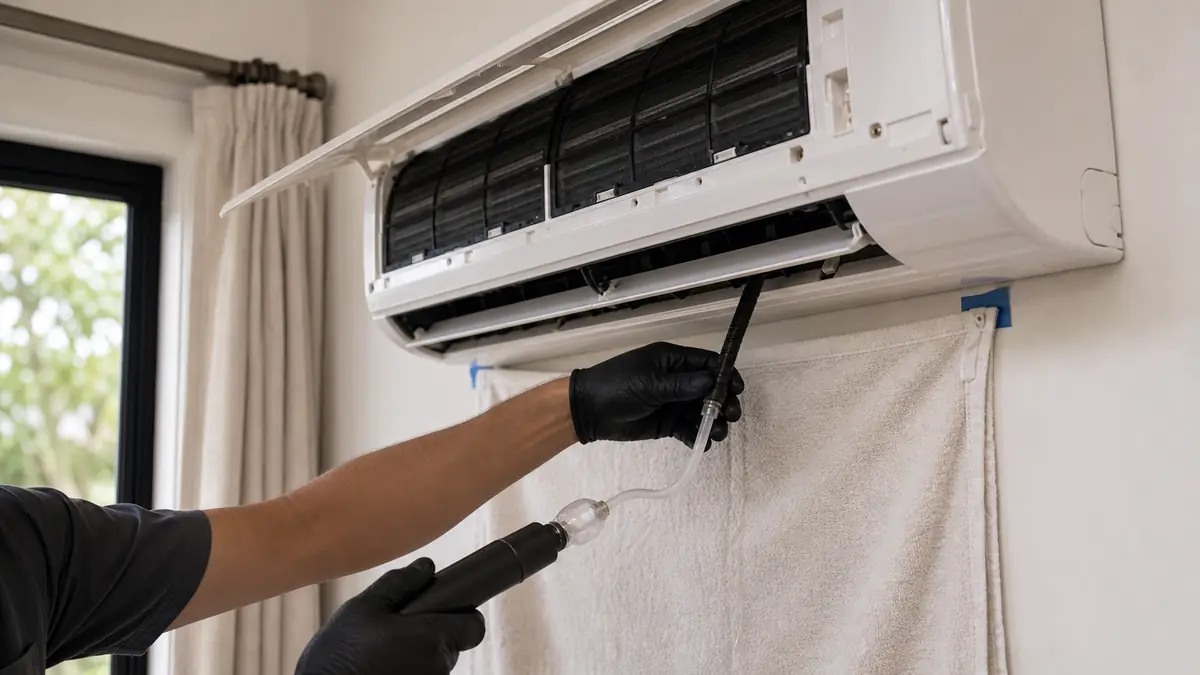
Why is my Mitsubishi head leaking water?
A wall head makes condensate as it cools; that water normally drains away by gravity or a small pump. When the condensate line clogs with algae and dust, or the pump fails, the pan overflows and water runs down the wall. Mitsubishi flags this as P4 (drain sensor/float) or P5 (drain pump abnormal). A dirty filter often kicks it off by freezing the coil, which then dumps meltwater faster than the drain can move.
| Symptom | Likely cause / first check | Cost lane |
|---|---|---|
| Steady drip, P4 or P5 code | Clogged condensate drain; clear and flush | $79-$250 |
| No drainage, pump silent | Failed drain pump or float switch; replace | $200-$450 |
| Ice on coil then dripping | Dirty filter/coil (P6) or low charge (U7); clean or recharge | $120-$1,500 |
| Leak at line-set wall penetration | Poor slope or sleeve on install; re-pitch line | $150-$600 |
Is it water or refrigerant leaking?
This is the first thing we sort out, because the fixes are worlds apart. Clear water pooling under the head is condensate, a drain problem. If instead the coil frosts over, cooling goes weak, and you see a U7 or P8 code, you are losing refrigerant, usually at a flare joint, and the "leak" is melting frost. Adding refrigerant without fixing the joint just leaks again and can damage the compressor. We confirm with gauges and a leak search.
What can I do before the tech arrives?
Shut the head off so it stops making condensate, lay down a towel or shallow pan, and pull the filter, rinsing it if it is dirty. Do not keep running a leaking unit hoping it clears, especially in a plaster-walled Lincoln Park home where water tracks behind finishes. If the leak follows humid days, note that for us; it helps confirm a drain capacity issue versus a one-off clog.
How does a tech walk through a leaking head?
The order matters, because each step rules out a cause. First we confirm it is condensate, not refrigerant, by checking for frost and reading any U7 or P8 code. Then we pull and inspect the filter and indoor coil, since restricted airflow that froze the coil is a common trigger for what looks like a drain leak. Next we test the drain path: pour water into the pan to see if it clears, check the slope of the condensate line, and on a pumped head listen for the pump and meter the float switch that throws P4. A blocked gravity line gets cleared and flushed with a nitrogen or CO2 cartridge or a wet vacuum at the termination; a dead pump or float gets replaced. Finally we check the line-set sleeve at the wall penetration, because a poorly pitched run on the original install can weep at the exterior wall on a 1920s Lincoln Park bungalow. Every leak gets traced to its actual source before any part is quoted.
How do we keep it from coming back?
A real fix is more than mopping up: we clear and flush the condensate line, test or replace the pump and float, clean the coil and pan, and confirm the line is pitched correctly. On Pomona's heavy summer runtime, an annual drain flush is cheap insurance. The maintenance calendar sets the timing, and our fault-code page covers the P4/P5 codes in context.
Common questions
Water is dripping from my wall head onto the floor. What do I do now?
Turn the unit off to stop adding condensate, set a towel or pan, and check the filter, which is the most common root cause when it is clogged. Then call us. Most often it is a blocked condensate drain or a failed drain pump, a P4 or P5 fault, and running the unit longer only spreads the water.
Why does my mini-split leak only on humid days?
A wall head pulls more moisture from the air on a muggy August afternoon, so a drain that is partly clogged finally overflows when condensate volume peaks. The fix is the same, clear the drain and check the pump, but humidity is why it shows up now and not in dry weather.
Could the leak be refrigerant instead of water?
Possibly, and it matters. A refrigerant leak does not puddle clear water; it shows as weak cooling, frost on the coil, and a U7 or P8 code. If your head is icing up and then dripping as the ice melts, that is a refrigerant or airflow problem, not a drain problem. We test to tell them apart.
Can a leaking head damage my Pomona home?
Yes, if ignored. Condensate running down a plaster Lincoln Park wall stains finishes and can feed mold behind the surface. On a second-floor Phillips Ranch install it can reach the ceiling below. Catching a P5 drain fault early is far cheaper than the drywall and paint it can ruin.
Related: AC repair · Wall-mount mini-splits · P4 and P5 codes · Maintenance calendar